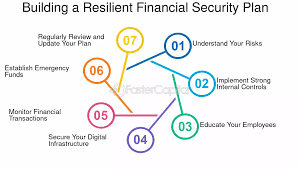
Financial security is not built overnight. It is the result of consistent habits, clear priorities, and realistic planning over time. Many people believe financial security requires high income or complex investment strategies, but the foundation is much simpler. Before thinking about advanced investing, everyone needs to master the basics.
This article covers Steps 1 to 3 of building financial security. These steps form the groundwork for long-term stability, regardless of income level or financial goals. Without them, even high earners can struggle financially.
Why Financial Security Matters
Financial security is about more than money. It is about peace of mind.
When you have financial security, you are better able to:
- Handle unexpected expenses
- Make decisions without constant financial stress
- Focus on long-term goals instead of short-term survival
- Avoid high-interest debt cycles
Security does not mean wealth. It means control, stability, and preparedness.
Step 1: Understand Where Your Money Really Goes
The first step toward financial security is awareness. Many people struggle financially not because they earn too little, but because they do not clearly understand their spending habits.
Track Your Income and Expenses
You cannot manage what you do not measure. Start by identifying:
- Total monthly income
- Fixed expenses (rent, utilities, insurance)
- Variable expenses (food, transportation, entertainment)
This process often reveals spending patterns people did not realize existed.
Separate Needs From Wants
Financial security begins when you can clearly distinguish between:
- Needs: essentials required to live and work
- Wants: discretionary spending that improves comfort or enjoyment
This does not mean eliminating all wants, but understanding their impact.
Why This Step Is Critical
Without knowing where your money goes, it is impossible to:
- Build savings
- Reduce debt effectively
- Plan for future goals
Awareness creates control.
Step 2: Build a Basic Emergency Fund
Once you understand your cash flow, the next priority is protection. Life is unpredictable, and emergencies are not optional.
What Is an Emergency Fund?
An emergency fund is money set aside specifically for unexpected expenses such as:
- Medical bills
- Car repairs
- Job loss or income disruption
- Urgent home repairs
This fund acts as a financial shock absorber.
How Much Should You Save First?
For beginners, the goal is not perfection. A practical approach is:
- Start with a small, achievable target
- Build toward one to three months of essential expenses
Even a modest emergency fund can prevent financial setbacks.
Where to Keep Emergency Savings
Emergency funds should be:
- Easily accessible
- Kept in low-risk accounts
- Separate from daily spending money
Liquidity matters more than returns at this stage.
Why Emergency Funds Improve Financial Security
Without an emergency fund, people often rely on:
- Credit cards
- High-interest loans
- Borrowing from others
These options increase stress and long-term financial damage. An emergency fund provides independence and stability.
Step 3: Control and Reduce High-Interest Debt
After building basic awareness and emergency protection, the next step is addressing high-interest debt.
Why High-Interest Debt Is a Major Obstacle
Debt with high interest rates—such as credit cards or personal loans—works against financial security by:
- Draining cash flow
- Increasing stress
- Delaying savings and investment goals
Interest compounds against you, just like investments compound for you.
Identify and Prioritize Debt
Start by listing:
- Total debt balances
- Interest rates
- Minimum payments
Focus first on debts with the highest interest rates, as they cause the most damage over time.
Avoid Taking on New High-Interest Debt
Reducing debt is difficult if new debt keeps appearing. Improving spending discipline and using your emergency fund wisely helps break this cycle.
Debt Reduction Is About Behavior, Not Just Math
While strategies matter, mindset is equally important.
Small Wins Build Momentum
Paying off even one small debt can increase motivation and confidence.
Consistency Beats Aggression
Sustainable repayment plans are more effective than extreme short-term efforts that lead to burnout.
How Steps 1 to 3 Work Together
These steps are interconnected.
- Tracking spending creates awareness
- Emergency savings provide protection
- Debt reduction frees up cash flow
Together, they form a stable foundation for future financial growth.

Common Mistakes to Avoid Early On
Skipping the Basics
Many people rush into investing before building emergency savings or managing debt. This increases risk and stress.
Being Too Hard on Yourself
Financial change takes time. Progress matters more than perfection.
Comparing Your Journey to Others
Everyone’s financial situation is different. Focus on your own path.
Why These Steps Matter Before Investing
Investing without financial security is risky.
Market fluctuations can force people to:
- Sell investments at the wrong time
- Take on debt during downturns
- Abandon long-term plans
Steps 1 to 3 help ensure that investments can remain untouched during short-term challenges.
Building Habits That Last
Financial security is built through habits, not one-time actions.
Simple Habits That Help
- Reviewing expenses monthly
- Saving automatically
- Paying more than minimum debt payments when possible
Over time, these habits create stability and confidence.
Financial Security Is a Process
There is no finish line where financial security suddenly appears. It grows gradually as habits improve and decisions become more intentional.
Steps 1 to 3 are not glamorous, but they are essential. They provide the structure that supports everything else—from investing to retirement planning.
Final Thoughts
Building financial security starts with simple, practical actions. By understanding your money, preparing for emergencies, and controlling high-interest debt, you create a strong financial foundation.
These first three steps do not require high income or advanced knowledge—only consistency and patience. Once they are in place, future financial goals become clearer, more achievable, and far less stressful.
Financial security is not about doing everything at once. It is about doing the right things in the right order.
Summary:
Discusses the wealth building principles of compounding interest, leverage and property investment.
Keywords:
compounding,compound interest,gearing,leverage,property investment,investment
Article Body:
We would all like to think of ourselves enjoying the good things in life, not having to stress about finances, and not having to be concerned about growing old, poor.
But if we are currently living from pay cheque to pay cheque, never seeming to get ahead or having any savings, how do we change things? Where do we start in our quest for financial security?
The best thing we can do, is sit down, take a deep breath and contemplate the differences between the haves and the have nots, the achievers and the laymen. What is it that the successful and wealthy do, that is different to us? What are the principles that they utilise to create wealth?
Once we find out the principles that others who have created financial security have used, it seems that then the only step left would be for us to try and duplicate the process.
Following is a list of some of the wealth building principles that I have discovered in my study of and conversations with successful people.
These concepts have been utilised extensively by those who have already created enormous wealth.
- Use the power of Compounding Interest/Growth. John D. Rockerfeller once described compounding interest as the �Eighth Wonder of the World�.
Compounding is also referred to as Rate & Time because the longer the time, and the higher the growth rate, the greater the effects of compounding become.
Compounding works by letting any interest earned get added to the initial investment, and then the next lot of interest is calculated on the sum of the two, and so on. Interest is earned on interest. This gives the effect of exponentially increasing the value of an investment.
One of easiest ways to calculate how compounding interest works with different rates of return is to become familiar with the Rule of 72. This rule states that �The number of years that it will take for your money to double is 72 divided by the interest (growth) rate�.
Therefore if you have $1,000.00 invested at 10% interest, then the number of years that it will take for your money to double to $2000.00 is 7.2.
72 divided by 10 = 7.2
- Use the tried and true method of investing in residential real estate.
Statistics show that over 98% of the world�s millionaires have made their money through property.
It should really not come as a surprise, because everyone needs a place to live, and generally at least one third of the population are renting. Property is a necessity, so it can never go out of fashion.
As the population increases, so does the need for housing. The laws of supply and demand therefore will ensure that prices keep rising.
Banks consider property to be one of the most secure investments and because of this they will loan you a high percentage of the value. This leads to the next principle.
- Using Other Peoples Money or Gearing is a tool used extensively by the wealthy.
Why is using Other People�s Money so important? The reason is that it is possible to use �leverage�, also known as �gearing� to obtain a greater result, than you could have obtained using only your own contributions. The word leverage comes from �lever�. As you know a small amount of force applied on one end of a lever, can produce force far greater than what was initially exerted. A lever has the effect of multiplying the power exerted.
In the case of investing, it is referred to as leveraging when you use just a small portion of your own money, say 10% deposit on a $300,000.00 house, and borrow (leverage) the rest, in this case 90%. The capital growth that you benefit from is then calculated on the full $300,000.00, not just the $30,000.00 that you personally contributed, having the effect of multiplying your capital gain.
Gearing allows you to purchase a far more expensive property than you could if you were using only your own money. Controlling assets of a higher value means that compounding growth has more to work on, and therefore your net worth will increase much quicker. Gearing allows you to build an investment portfolio more quickly than would otherwise be possible.

Leave a Reply